Blind and visually-impaired massage therapists in Penang: what to know
By Janice · Updated 2026-07-11
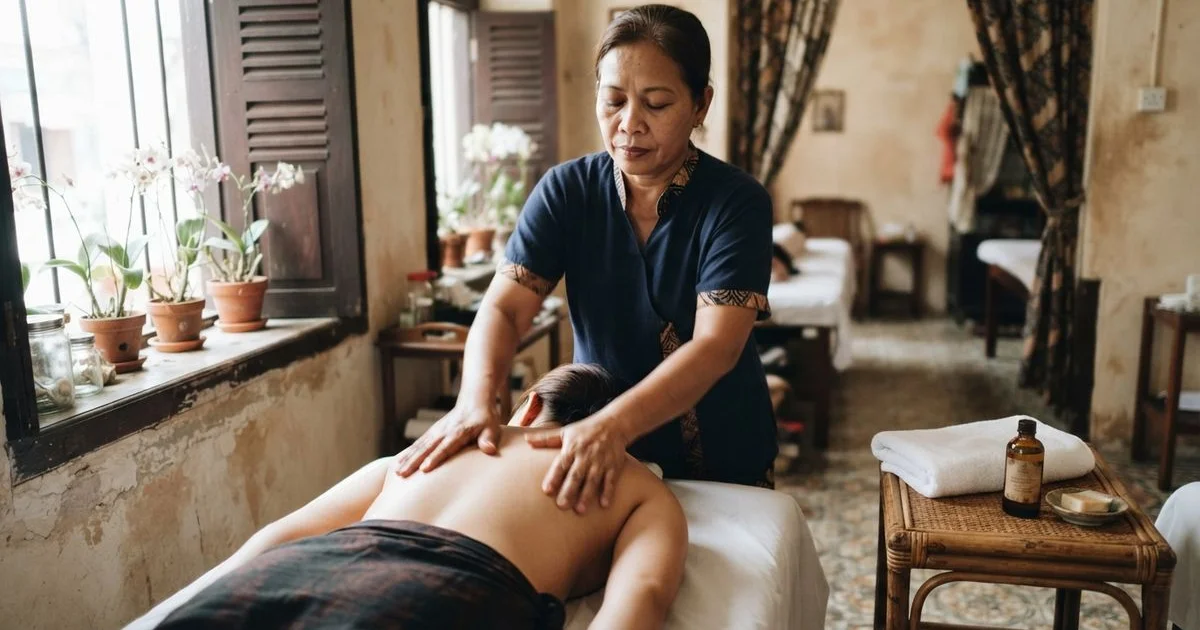
Blind and visually-impaired massage therapists make up a respected part of Penang’s massage trade, with a tradition and reputation for skill that goes back decades in Malaysia and the wider region. If you haven’t booked with one before, a bit of straightforward information tends to answer most of the hesitation people feel going in.
Where the skill comes from
Many blind therapists train through dedicated vocational programmes that teach anatomy, pressure technique and massage styles specifically adapted for touch-based practice. Because sight isn’t part of how the work is done in the first place, blindness isn’t a limitation on technique, it’s simply not part of the skill at all. Reviewers across blind and visually-impaired masseur listings in Penang consistently mention skilled, precise pressure work as a strength, which lines up with how much of the training is built specifically around touch.
What a session actually looks like
The practical flow of a session is close to identical to any other massage: a short consultation, the treatment itself, and a check-in on pressure. A few small differences some first-time clients notice:
- The therapist may ask you to describe an area verbally rather than pointing, since gesturing isn’t useful feedback.
- Room layout and equipment are set up for the therapist’s independent navigation, so you don’t need to guide them around.
- Some therapists use a cane or a guide to move between rooms; this is routine and not something that needs acknowledgment or assistance unless offered and accepted.
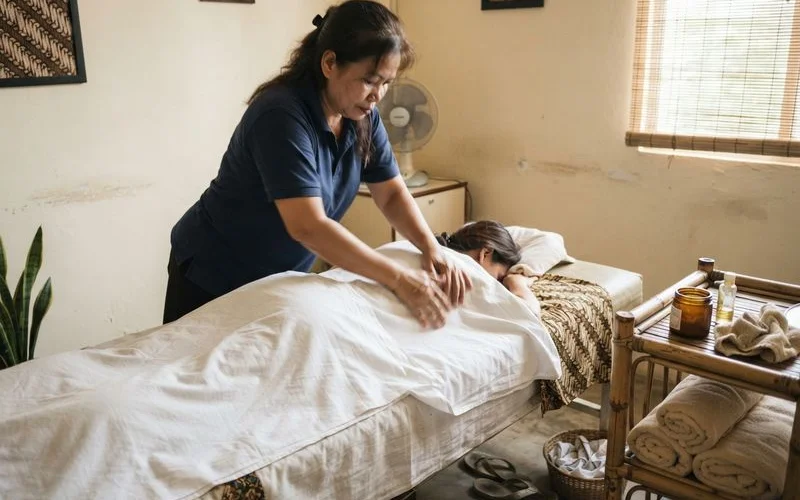
Booking and communicating respectfully
Book and communicate exactly as you would with any therapist: state your preferences clearly, mention any injuries or areas to avoid, and give feedback on pressure during the session. There’s no special etiquette required beyond ordinary courtesy. If you’re unsure about anything logistical (how to hand something over, whether to describe rather than point), a simple, direct question to the therapist or front desk is completely normal and welcomed rather than awkward.
Common questions people are too shy to ask
It’s fine to ask the front desk practical questions in advance: how the therapist prefers to receive feedback, whether a family member can sit in for a first visit, or how payment is typically handled at the end. None of these are impolite questions, and asking beforehand tends to make first-time clients feel more at ease than working it out mid-session. If you’re specifically arranging this for an elderly parent, our guide on choosing reflexology or foot massage for an aging parent covers similar practical questions to ask beforehand.
Addressing the hesitation directly
Some first-time clients feel uncertain going in, not out of any real concern about quality, but simply from unfamiliarity. It’s worth naming plainly: this hesitation isn’t supported by outcomes. The recurring theme across reviews for this category is skilled, attentive work, the same praise pattern seen across the wider massage trade in Penang, not a caveated or lesser version of it.
Where to start
If you’re looking to book, treating this the same as choosing any spa applies: check recent reviews for consistency, confirm pricing and duration beforehand, and be specific about what you want out of the session. The therapist’s skill is the same consideration it would be anywhere else, it just happens to be delivered without sight being part of the equation at all.
A note on employment and dignity
Massage has historically been one of the more accessible skilled professions for blind and visually-impaired people in Malaysia and the wider region, offering genuine, well-paid, respected work rather than charity employment. Booking a session with a blind therapist isn’t an act of charity on the client’s part, it’s simply choosing a skilled provider, and treating it as anything other than that (over-praising, being overly cautious, or being condescending about capability) tends to feel more awkward to the therapist than ordinary, straightforward client interaction.
Finding a listing
The directory lists blind and visually-impaired masseur businesses using the same published scoring method applied across every category, rating on sentiment, consistency and value the same way as any other listing, rather than a separate standard.
FAQ
- Are blind massage therapists specially trained?
- Yes. Training typically covers the same anatomy, technique and pressure work as sighted therapists, often through dedicated vocational programmes for the visually impaired, and many therapists build years of hands-on experience.
- Do I need to guide a blind therapist around the room?
- No, this is part of their normal working routine and they'll direct the session themselves. If you'd like to help with something specific (like handing over a towel), a simple verbal offer is fine, but it's not expected.
- Is the massage experience any different technically?
- Not fundamentally. Many clients report that touch-based assessment, without visual distraction, can make pressure and problem areas easier for the therapist to locate precisely.
- How do I communicate pressure preferences during the session?
- Exactly the same way as with any therapist: speak up clearly. Verbal feedback is, if anything, relied on more directly in this setting.