Confinement (pantang) massage after childbirth in Penang
By Janice · Updated 2026-07-08
This is general cultural and wellness information, not medical advice. Always follow your own doctor’s guidance on timing and any restrictions specific to your delivery and recovery.
Confinement care, often called “pantang” in Malaysia, is a traditional postpartum recovery period, typically 30 to 44 days, built around rest, specific foods, and a set of practices believed to help the body recover after childbirth. Massage is one part of that tradition, and it’s a genuinely different service from a general wellness massage, both in technique and in who provides it.
What confinement massage actually involves
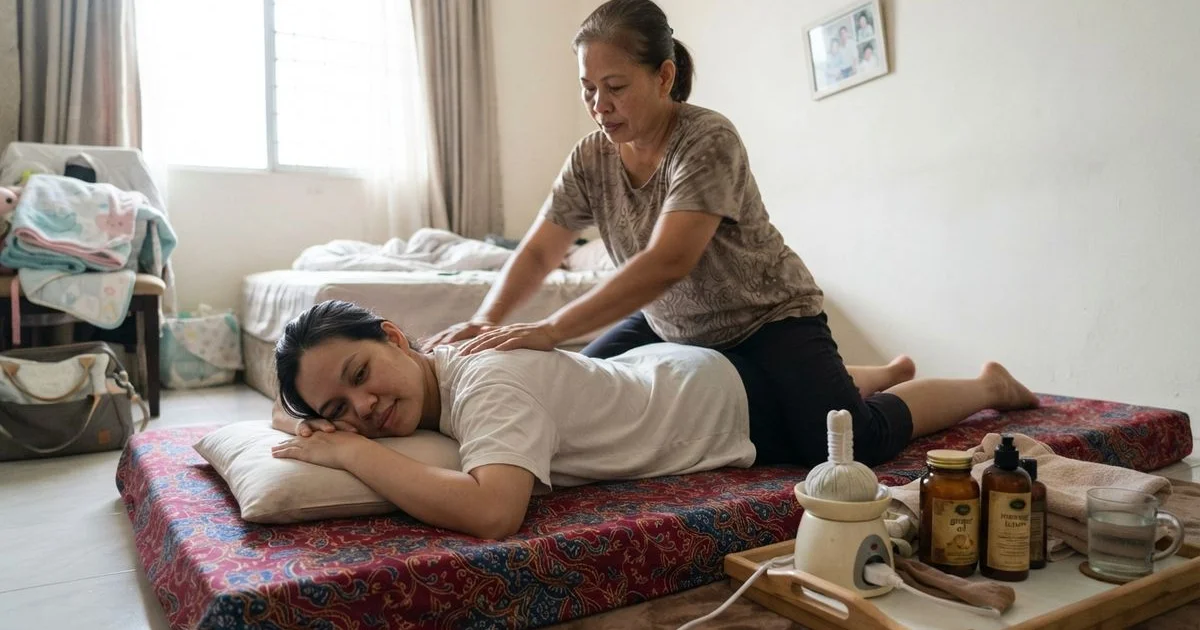
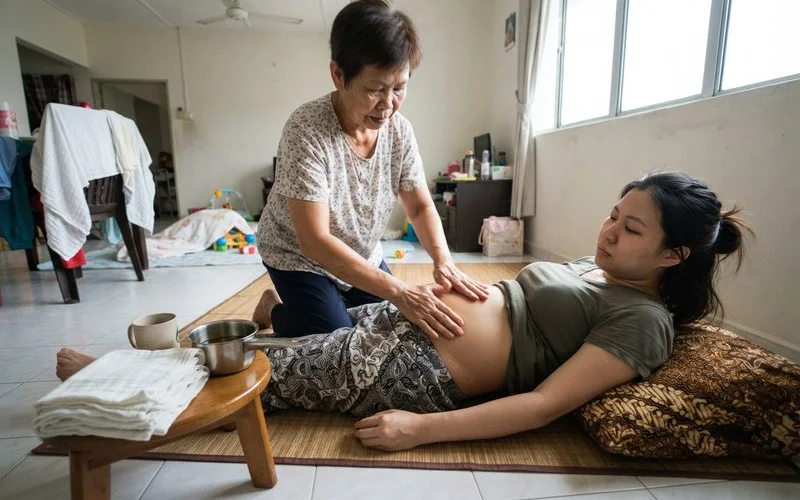
Confinement massage draws on techniques found in traditional and Balinese-style massage, adapted specifically for postpartum bodies: gentle abdominal work aimed at supporting the uterus’s return to its pre-pregnancy size, circulation-focused strokes on the legs and back, and sometimes a herbal compress or binding (bengkung) as part of the same visit. It’s slower and gentler than a typical relaxation massage, and a practitioner trained in this specific practice will adjust pressure and technique very differently from a general spa massage.
Typical timing
| Delivery type | Common starting point | Why |
|---|---|---|
| Vaginal delivery, no complications | Around day 7-10 | Time for initial healing before abdominal work |
| Caesarean section | Often 4-6 weeks, doctor-confirmed | Surgical wound needs to heal first |
| Any delivery with complications | As advised by your doctor | Individual recovery varies |
Treat this table as a general shape, not a rule to follow without checking with your own doctor first, especially after a caesarean or a delivery with complications.
Choosing a practitioner
- Specific experience in postpartum or confinement massage, not just general massage training. Ask directly rather than assuming.
- Comfortable working at your home, since most confinement massage happens as a home visit during the recovery period.
- Clear about what’s included: a herbal compress, abdominal binding, or a herbal bath are sometimes bundled, sometimes separate.
- Respectful of your pace, willing to shorten or adjust a session if you’re tired or in discomfort, which is common in the early postpartum weeks.
Cost and how it’s usually booked
Confinement massage is typically booked as a package covering the full 30 to 44 day period, rather than a single session, since the practice is built around a series of visits at intervals through the recovery window. Packages commonly bundle several massage sessions with herbal baths or a binding service, and pricing varies quite a bit depending on how many sessions and extras are included. Ask for the full package breakdown, not just a per-session number, since the total commitment is what matters for budgeting here.
What family members are usually arranging
It’s common in Malaysian households for a mother, mother-in-law or another family member to arrange confinement care on behalf of a new mother who is, understandably, not up to researching and booking things herself in the first couple of weeks. If you’re arranging this for someone else, the practical checks above (experience, home-visit comfort, what’s included) are exactly what to ask about on their behalf, alongside simply asking the new mother what she’d actually find comfortable rather than assuming what “should” help. If you’re doing similar research on behalf of an elderly parent instead, our guide on choosing reflexology or foot massage for an aging parent walks through similar practical checks.
When to hold off or check first
If there are any signs of infection, unusual bleeding, or a wound that hasn’t healed as expected, postpone confinement massage and speak to a doctor first. Confinement massage is meant to support a normal recovery, not to be pushed through when something needs medical attention instead.
Finding a practitioner
Not every general massage therapist offers confinement-specific care, so it’s worth confirming this specialisation directly rather than assuming a traditional massage listing automatically includes it. The directory lists which businesses offer postpartum-specific services as part of each profile, scored using its published scoring method, which is a reasonable starting point for narrowing down a shortlist before you call around.
FAQ
- When does confinement massage usually start after birth?
- Traditionally around day 7 to 10 postpartum for a vaginal delivery, and later, often after 4-6 weeks, following a caesarean section, once a doctor has confirmed the wound has healed. Always confirm timing with your own doctor rather than a fixed rule.
- Is confinement massage the same as a regular relaxation massage?
- No. It uses techniques and pressure specific to postpartum recovery, focused on the abdomen, back and circulation, and is usually done by a practitioner trained specifically in postnatal care, not a general spa therapist.
- Can confinement massage be done as a home visit?
- Yes, this is actually the most common arrangement, since new mothers are often not travelling much in the weeks after birth. Confirm the practitioner's experience and hygiene practices as you would for any home visit.
- Does confinement massage help with postpartum recovery?
- Many mothers report it helps with circulation, muscle tension and general comfort during recovery, alongside traditional practices like herbal compresses. It should support, not replace, any medical care or checkups your doctor has recommended.