Thai, Balinese, reflexology or therapeutic: choosing a massage style in Penang
By Janice · Updated 2026-06-24
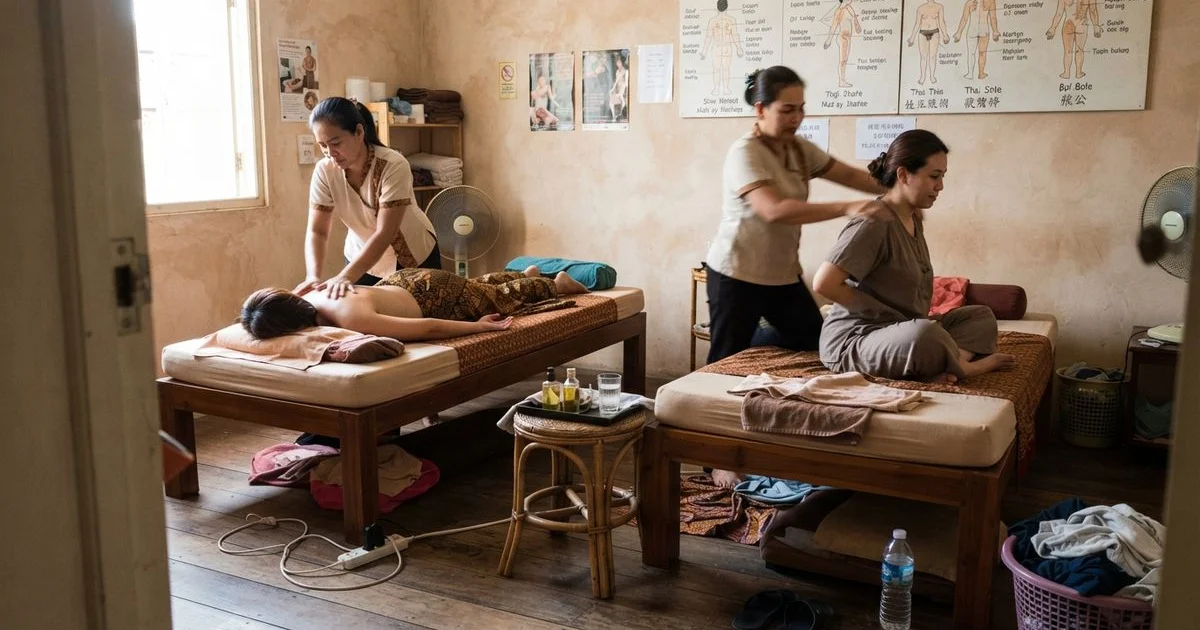
Walk into any spa directory search for Penang and the menu of styles gets long fast: Thai, Balinese, traditional, reflexology, therapeutic, sports, deep tissue. Most of that overlaps more than the names suggest, and picking the wrong one for what you actually want is a common way to leave a session disappointed. Here’s how they actually differ.
The main styles at a glance
| Style | How it’s done | Best for | Typical intensity |
|---|---|---|---|
| Thai massage | Clothed, on a mat, stretching and compression | Stiffness, limited mobility, active recovery | Firm |
| Traditional / Balinese | Oil, long strokes, kneading | General relaxation, first-timers | Light to moderate |
| Reflexology / foot massage | Pressure points on feet and lower legs | Short sessions, circulation, tired feet | Moderate |
| Therapeutic / sports | Targeted deep pressure on specific muscles | Chronic tension, training recovery, old injuries | Firm to deep |
If you want a fast starting point, Thai massage is the highest-demand style in Penang by a wide margin, which usually means more therapists genuinely trained in it and more spas offering it as a specialty rather than a side option.
Thai massage: what it actually involves
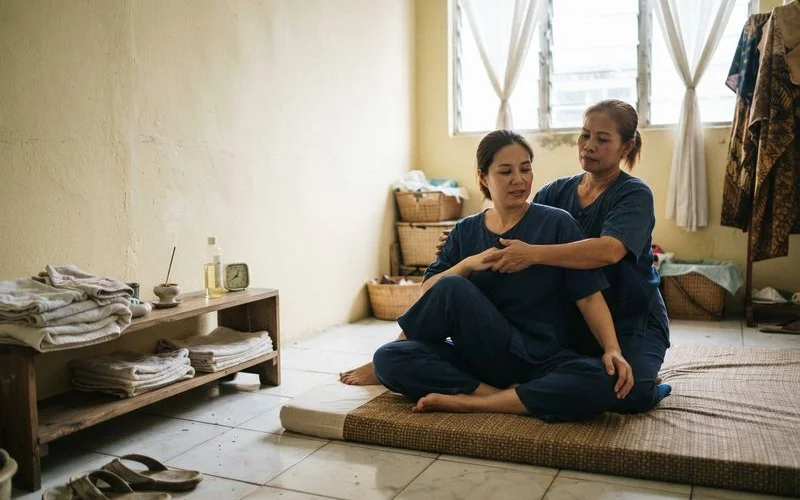
Thai massage doesn’t use oil. You wear loose clothing (most spas provide it) and lie on a padded mat while the therapist uses their hands, forearms, knees and sometimes feet to apply pressure and guide your body through stretches. It follows lines along the body rather than isolated muscle groups. People who find regular oil massage too passive, or who carry stiffness rather than sharp pain, tend to respond well to it.
Traditional and Balinese: the gentler default
This is the style most people picture when they think “massage”: oil, long gliding strokes, kneading, and a private table rather than a mat. It’s the most common style across Penang’s spas by listing count, and reviewers most often describe it as relaxing rather than intense. It’s a safe default if you’re not sure what you want, or if you’re booking for someone who’s nervous about a first session.
Reflexology and foot massage: low commitment, high demand
Reflexology focuses entirely on the feet (and sometimes lower legs), applying pressure to specific points believed to correspond to other parts of the body. Sessions are often shorter and cheaper than a full-body treatment, which makes it a popular add-on to a shopping trip or a short break during the day. It’s also one of the most searched styles in Penang, so there’s no shortage of choice. If you want more detail on how a typical session runs, the guide to what to expect from a reflexology or foot massage session walks through it step by step.
Therapeutic and sports massage: for a specific problem
This is the style to book if you have a specific complaint: a tight shoulder from desk work, a recovering training injury, chronic lower back tension. Therapists trained in this style work more slowly and target specific muscle groups rather than covering the whole body evenly, and sessions can feel more clinical than relaxing. It’s the right tool for solving a problem, not necessarily for unwinding after a stressful week.
Mixing styles across visits
You don’t have to commit to one style forever. A common pattern among regulars is to rotate: reflexology on a quick weekday visit, a longer traditional or Thai session on the weekend when there’s more time, and therapeutic work booked specifically after a flare-up of an old injury. Rotating like this also makes it easier to notice which style actually helps with which problem, rather than assuming one treatment should fix everything.
How to actually decide
Ask yourself what you want out of the hour: to switch off completely (traditional or Balinese), to loosen up stiff joints and get moving again (Thai), to deal with a specific muscular issue (therapeutic or sports), or a short reset for tired feet (reflexology). Naming that before you call gives the front desk what they need to match you with the right therapist, rather than defaulting to whatever’s available that hour.
If you’re still unsure, the directory homepage lets you filter by style and see which spas score well for each one specifically, based on the published scoring method rather than who paid for placement.
FAQ
- What's the difference between Thai massage and a regular oil massage?
- Thai massage is done fully clothed, on a mat, using stretching and assisted yoga-like positions rather than oil. A traditional or Balinese oil massage uses long strokes and kneading, and you're partly or fully undressed under a towel.
- Is Thai massage supposed to hurt?
- It can feel intense during a stretch or a firm compression, but sharp pain is not normal. Tell the therapist to ease off if something feels wrong rather than pushing through it.
- Which style is best for someone who's never had a massage before?
- Traditional or Balinese massage at a moderate pressure is usually the gentlest introduction. Reflexology is a good low-commitment option too, since only the feet and lower legs are worked.
- Can I mix styles in one session?
- Some spas offer combination packages (for example, Thai stretching plus oil massage). Ask when booking, since not every spa offers a blended session.