Is your massage spa licensed? What Penang rules actually require
By Janice · Updated 2026-06-30
This is general information, not legal advice. Licensing requirements and enforcement can change, and specific questions about a business’s registration are best directed to the relevant local council.
The vast majority of massage and spa businesses in Penang operate properly, but the trade does attract a small number of unlicensed or improperly registered operators, partly because the barrier to opening a storefront is lower than in many other service industries. Knowing what should be in place gives you a concrete check beyond “the reviews look fine.”
What legitimate operation usually looks like
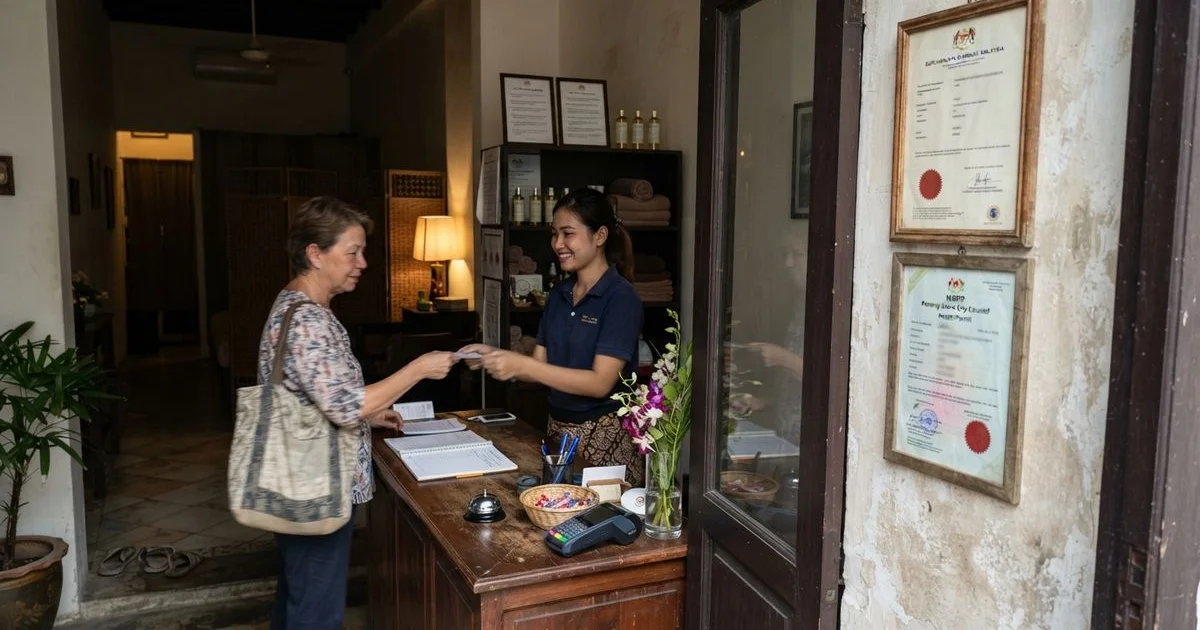
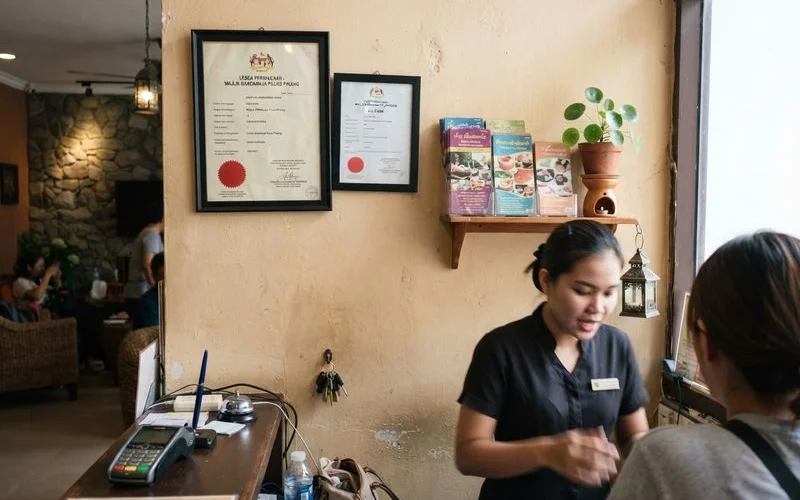
- A business premise licence from the local council: Majlis Bandaraya Pulau Pinang (MBPP) for Penang Island, or Majlis Bandaraya Seberang Perai (MBSP) for the mainland side. This should be displayed at the premises.
- Registration with the Companies Commission of Malaysia (SSM) as a registered business or company.
- For traditional and complementary medicine practitioners (which covers many reflexology and traditional massage therapists), voluntary registration exists under the Traditional and Complementary Medicine Act framework, administered through the Ministry of Health’s T&CM division.
None of this requires you to become an investigator before booking a foot massage. It’s context for when something feels off, not a checklist to run through for every visit.
Why this distinction matters in this trade specifically
Massage and reflexology sit in a category that can be confused, unfairly, with other services that trade on similar language. A properly run, licensed spa has every reason to be transparent about its registration, because it’s a point of legitimate pride and a competitive advantage, not a burden. A spa that becomes evasive or annoyed when you ask a straightforward question about licensing is telling you something.
Outcall and home-visit services
The same principles apply to outcall massage that comes to your hotel or home, arguably more so, since you have less context on the provider than you would walking into a physical premises. A legitimate outcall service operates under the same business registration as its physical location (if it has one) and is upfront about who’s coming, what ID they’ll carry, and what the booking confirmation covers. Being vague about any of that, or asking for unusual upfront payment methods, is worth treating as a reason to book elsewhere.
Foreign therapists and work permits
Penang’s massage trade includes a meaningful number of therapists trained in specific traditions abroad (Thai, Balinese, Chinese TCM styles). A properly run spa employing foreign therapists ensures they hold valid work passes for that role, arranged by the business, not something a customer needs to verify directly. It’s mentioned here mainly so you understand why a spa’s registration and its staffing practices are connected: a business cutting corners on one tends to cut corners on the other.
Quick checks before you book
| Check | How to do it |
|---|---|
| Business registration displayed | Look for it at the counter on arrival, or ask |
| Consistent business name and signage | Compare the name on the door to what’s listed online |
| Clear, professional booking process | Note if it’s evasive about basic questions |
| Reviews mention professionalism | Recurring “professional service” praise is a good sign |
What licensing does and doesn’t tell you
A licence tells you a business has cleared a basic administrative bar. It does not tell you whether the massage itself will be skilled, whether the room will be clean, or whether the pricing will be fair. Those are separate things worth checking through reviews and the questions covered in our guide on choosing a good spa. Licensing is one input among several, not a stand-in for the whole picture.
If something feels genuinely wrong
If a business is cagey about basic registration questions, operates from an unmarked space with no signage, or a receipt/registration request is met with pushback, treat that as a reason to walk away rather than push the issue in person. If a billing issue rather than a licensing one is what’s bothering you, see our guide on what to do if a Penang spa overcharges you or pushes add-ons. The directory surfaces licensing and registration signals where they’re publicly available as part of its broader scoring method, but for a formal concern about a specific business, the relevant local council is the right channel, not a review site.
FAQ
- Do massage therapists in Malaysia need a licence?
- Traditional and complementary medicine practitioners, including many massage and reflexology practitioners, can register under Malaysia's Traditional and Complementary Medicine Act framework, and businesses need the standard local council business premise licence (Penang Island City Council or MBSP, depending on location). Requirements and enforcement vary, so this is general orientation, not a legal ruling on any specific business.
- How can I check if a spa is properly registered?
- Ask directly, a legitimate spa will have no trouble stating it. You can also look for a business registration certificate displayed at the premises, which most councils require to be visible.
- Is an unlicensed spa automatically unsafe?
- Not automatically, but licensing is one of the few objective checks available before you've experienced the service firsthand. It's a reasonable filter, not a guarantee either way.
- What should I do if I suspect a business is operating without a licence?
- You can report it to the relevant local council (MBPP for Penang Island, MBSP for Seberang Perai). This is a council enforcement matter, not something the directory investigates or adjudicates.